Disinformation continues to represent a top global threat and with AI further harming access to reliable information while eroding the visibility, and by extension, the viability of quality journalism. As stated by the High Level Panel on Public Interest media a year ago, it is more urgent than ever to recognise the social and economic value of public interest media and properly invest in it like the public good it is.
Paris, 25 September 2026. Ahead of World News Day on 28 September, the Forum on Information and Democracy (FID), in partnership with the International Fund for Public Interest Media (IFPIM), has released a short video renewing the call for governments and policymakers to invest in public interest media.
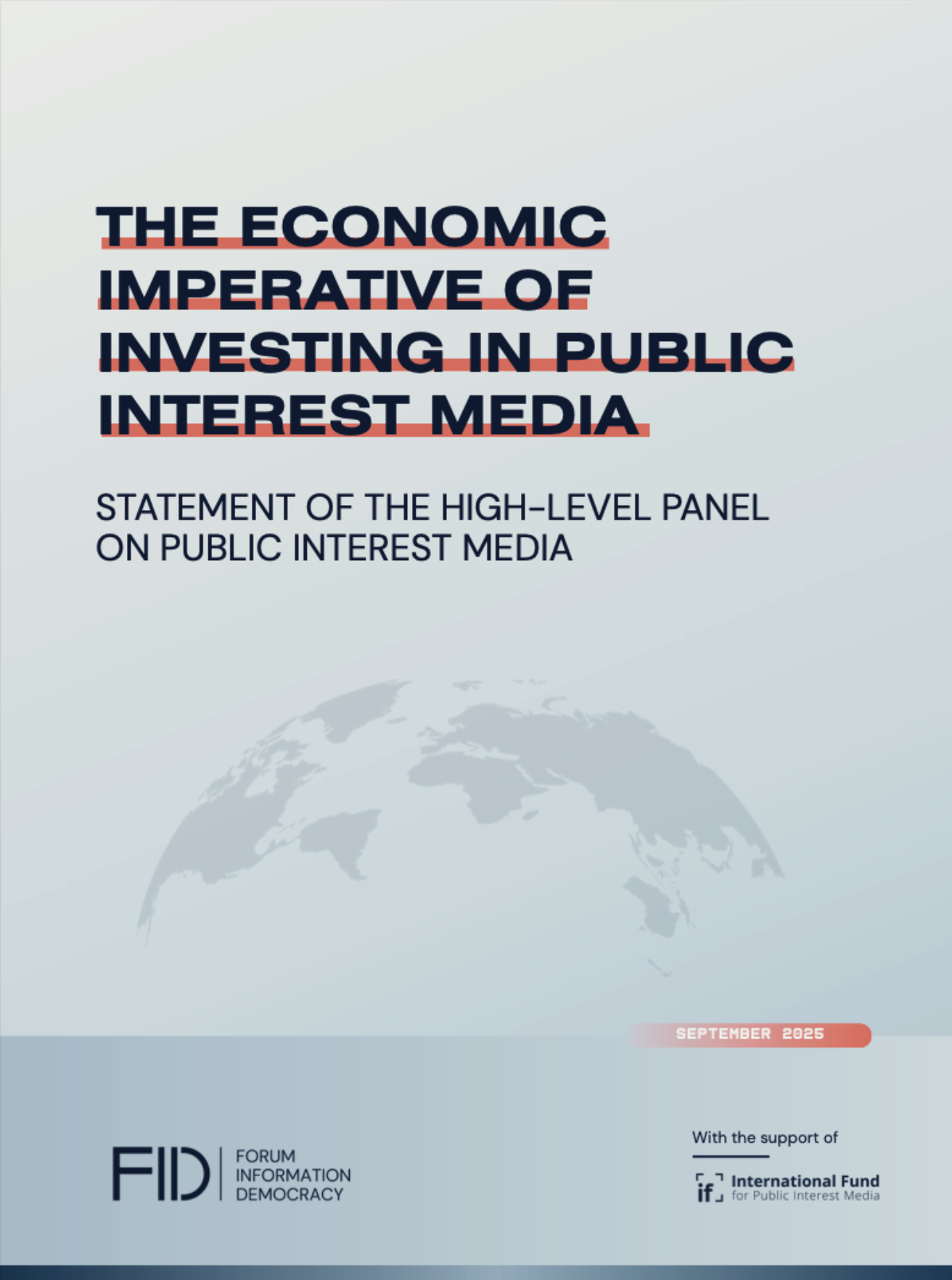
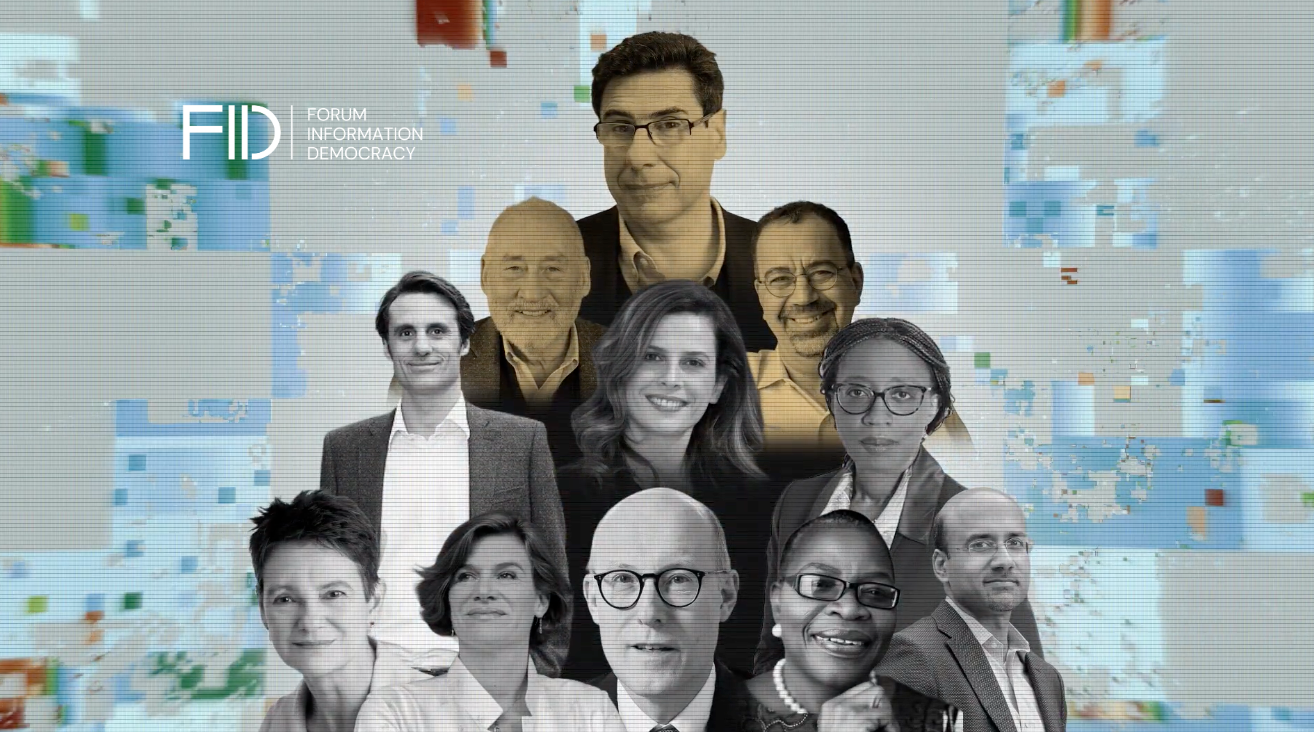
One year ago, the High-Level Panel on Public Interest Media, which was convened by FID and comprising 11 leading economists, including three Nobel Prizes, published a landmark statement making the economic case for such investment. The statement was picked up by over 80 media outlets and helped shape World News Day‘s call to action.
Twelve months on, the situation has not improved. Financial pressure on newsrooms continues to intensify, while the rapid growth of AI is reshaping the information ecosystem faster than public interest safeguards can keep pace. Google’s AI Overviews are reducing referral traffic to news publishers, and the introduction of advertising within AI chatbots threatens to divert further revenue away from journalism. Meanwhile, the cost of inaction is measurable: disinformation is estimated to cost the global economy $417 billion a year, with Russia alone spending an estimated $1.85 billion annually on foreign propaganda.
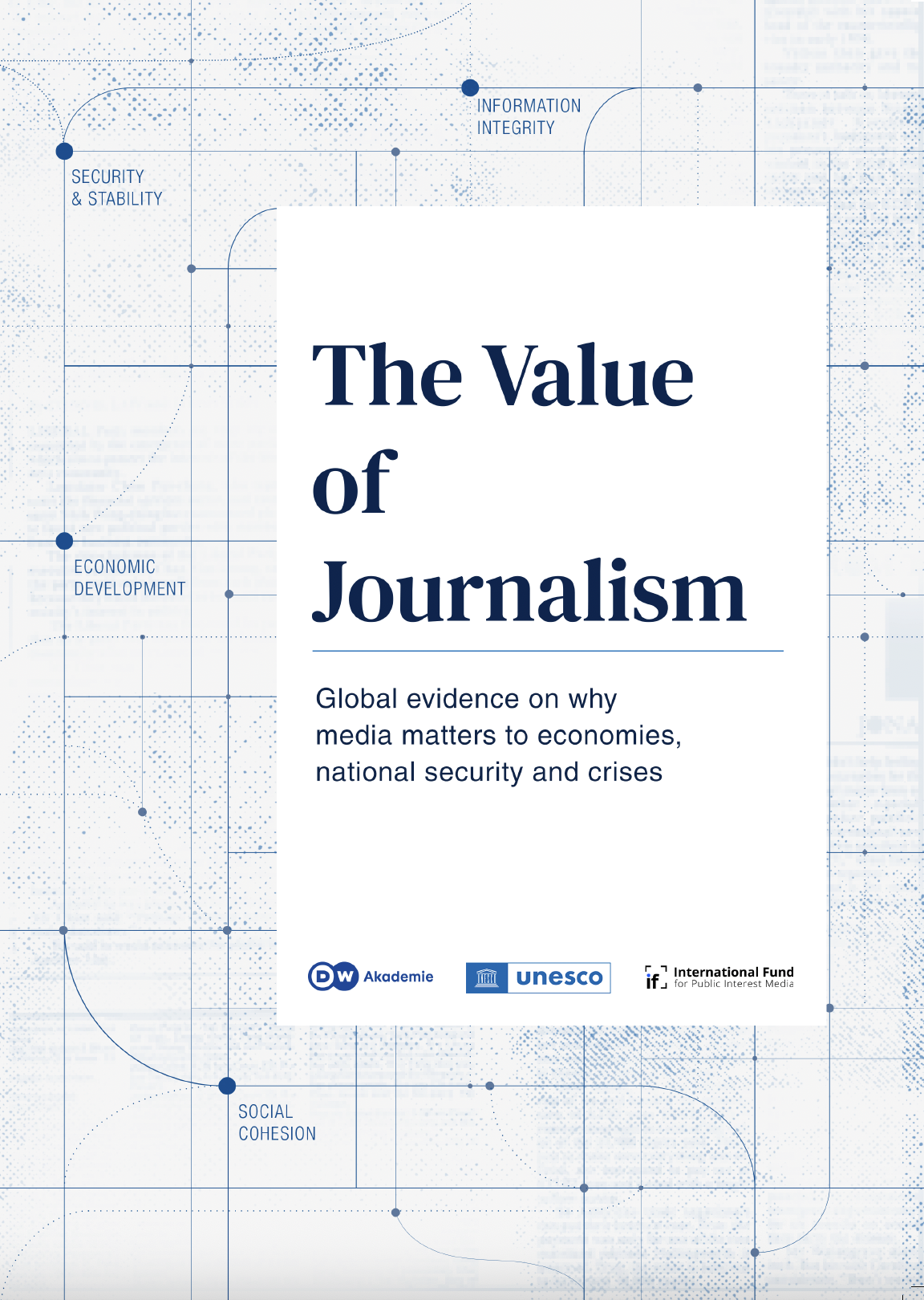
Drawing on the High-Level Panel’s statement and the recent Value of News report by UNESCO, DW Akademie and IFPIM, the video was developed as part of the World News Days 2026 campaign and the urgency to amplify the sharing of the value of trusted journalism and information integrity. It is a direct call to action directed at governments and policymakers, and is intended to raise awareness among a wider public.
The video is available with subtitles in English, French, Portuguese and Spanish.